Most people think of fingernails as purely cosmetic. We trim them, polish them, and rarely give them a second thought. But your nails can actually reveal important clues about your overall health. Changes in color, shape, or texture may sometimes signal that something deeper is going on inside your body.
While not every nail change means something serious, certain signs shouldn’t be ignored. If your nails look like any of the following, it may be time to schedule a check-up.
1. Pale or White Nails
If your nails suddenly appear unusually pale or almost white, it could be linked to anemia, liver problems, or nutritional deficiencies. Healthy nails typically have a soft pink tone due to blood flow underneath. When that color fades, it may indicate low red blood cell levels or circulation issues.
If you also feel fatigued, dizzy, or short of breath, consider speaking with a healthcare professional.
2. Yellow Nails
Yellowing nails are often associated with fungal infections, especially if the nails become thick or brittle. However, in some cases, persistent yellow nails can be connected to respiratory conditions, thyroid disease, or diabetes.
If over-the-counter treatments don’t improve the color, it’s wise to seek medical advice.
3. Blue or Purple Tint
A bluish tint to the nails may signal low oxygen levels in the blood. This can sometimes occur in people with heart or lung conditions. If you notice blue nails along with shortness of breath, chest discomfort, or unusual fatigue, seek medical attention promptly.
4. Dark Lines Under the Nail
A dark streak or line running vertically beneath the nail can be harmless in some individuals, especially those with darker skin tones. However, if the line appears suddenly, changes shape, or spreads into the surrounding skin, it should be evaluated by a doctor to rule out serious conditions such as melanoma.
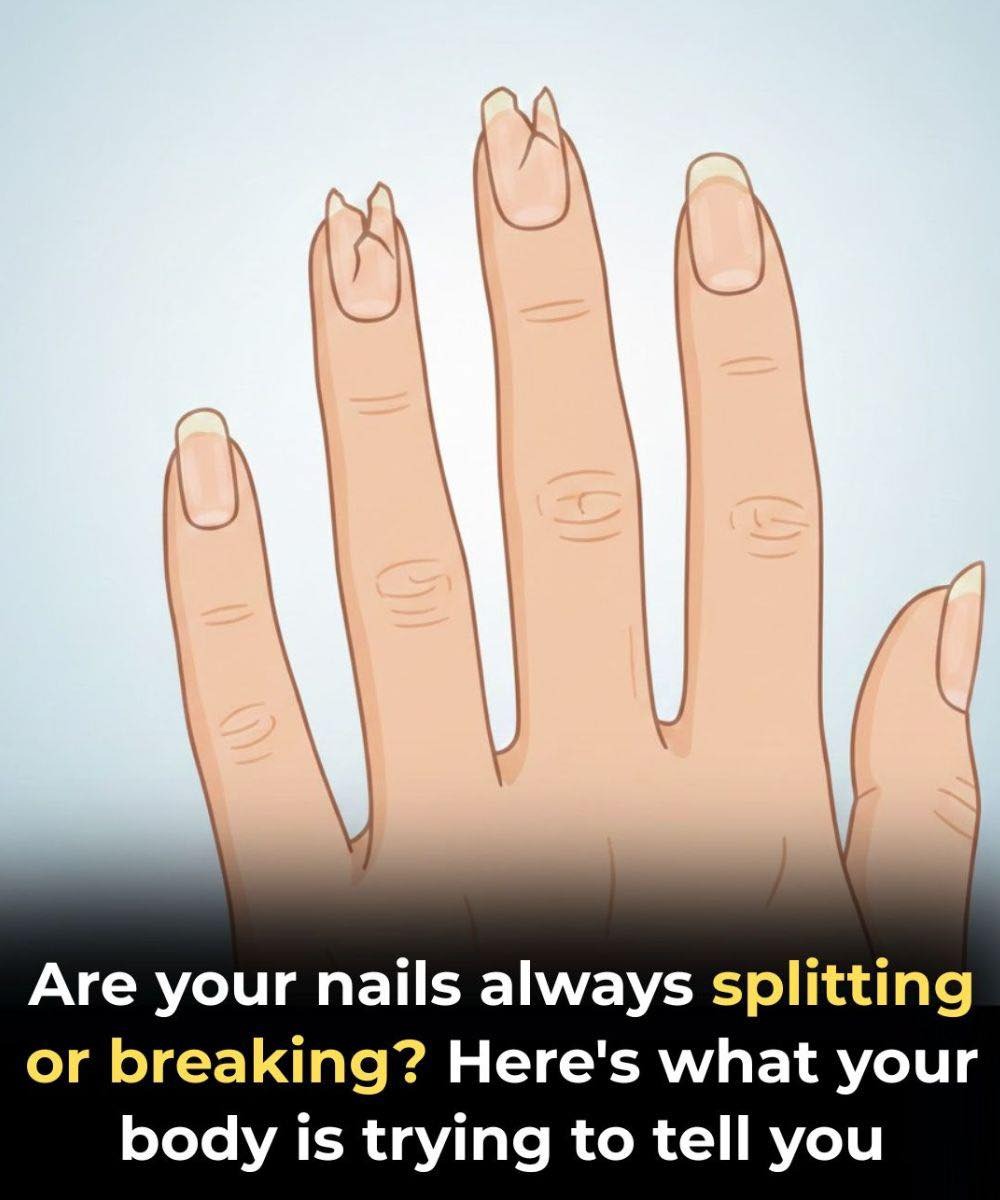
5. Brittle, Cracked, or Peeling Nails
Dry, fragile nails are often caused by frequent handwashing or chemical exposure. But persistent brittleness can sometimes be linked to thyroid disorders or vitamin deficiencies, particularly iron or biotin deficiency.
If your nails break easily despite moisturizing and proper care, a medical check-up may help uncover the cause.
6. Spoon-Shaped Nails
Nails that curve upward at the edges, forming a spoon-like shape (a condition called koilonychia), may be associated with iron deficiency anemia. If you notice this unusual shape along with fatigue or weakness, consider having your iron levels tested.
7. Clubbing (Rounded, Enlarged Nail Tips)