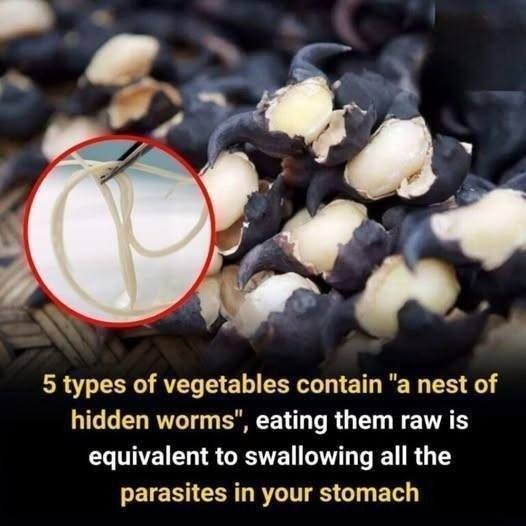
Parasites are often imagined as frightening organisms that steal nutrients and cause disease, and that reputation is well-earned. For thousands of years, parasites have posed a significant threat to human health. Even today, nearly 2 billion people are infected annually, with hundreds of thousands of deaths reported worldwide.
Improved sanitation has helped many countries, including Vietnam, control the spread of several parasitic diseases. However, the risk of infection in daily life remains, especially through contaminated food. Surprisingly, some common vegetables are considered “parasite hotspots,” particularly when eaten raw or undercooked.
Water Chestnut grows in swamps and paddy fields, making it highly susceptible to worms and harmful bacteria. Eating it raw can cause digestive illness, especially for those with sensitive stomachs.
Water Celery thrives in damp, muddy environments, which makes it a potential carrier of liver flukes. Raw consumption increases the risk of diseases transmitted from livestock to humans.