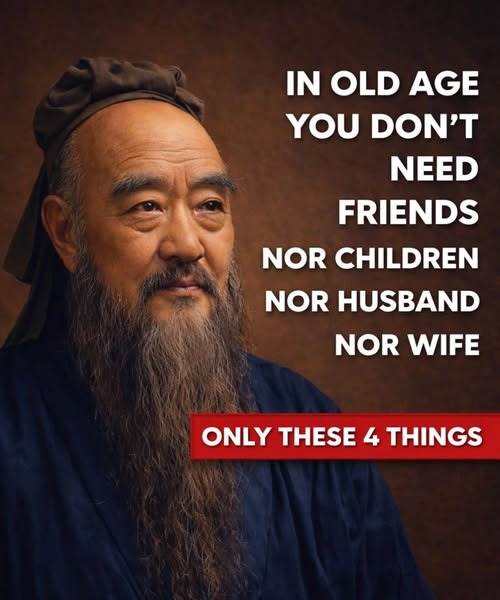
There is a fear that many people carry quietly throughout life. It is not the fear of poverty, nor even the fear of death. It is the fear of growing old and suddenly realizing that life was not lived in a meaningful or peaceful way. Not because of a lack of success or wealth, but because something inside feels unfinished—without purpose, without harmony, without inner stability.
More than 2,500 years ago, the Chinese philosopher Confucius deeply reflected on this very human concern. His teachings were not only about happiness in old age. He offered something much greater: guidance on how to live so that old age becomes the natural, rewarding result of a life lived with honesty, clarity, and balance.
For Confucius, old age was not a decline. It was a mirror. It reflects everything a person has planted in their heart, their choices, and their relationships.
From his wisdom, four essential principles emerge—principles that can help build a fuller, more peaceful old age.
1. Personal Dignity: The Foundation of a Peaceful Old Age
Confucius believed that a truly noble person never loses their self-respect, even if life takes away everything else. Many people compromise their values to stay comfortable, avoid conflict, or please others. In the moment, these choices may seem harmless. But over the years, living against one’s own truth creates a quiet inner wound.
A calm and balanced old age is built on quiet dignity—not loud pride, not arrogance, not an obsession with reputation. It is the simple ability to look back and feel at peace with who you were. To acknowledge mistakes without drowning in regret. To know that your caution came from wisdom, not fear.
“Quiet dignity is the foundation of a peaceful and balanced old age.”
Those who protect their dignity throughout life grow old with grace. Their presence brings calm, even when they say nothing at all.
2. Our Relationship with Time: Learning to Live in the Present
Another key teaching from Confucius is the understanding of time. Many people move through life stuck in the past or anxious about the future. Youth is spent waiting, adulthood is rushed, and old age becomes filled with regret.
True peace belongs to those who learned to live fully in the present moment.
This is not about chasing pleasure. It is about cultivating awareness—being awake in your own life. It means:
listening with full attention
valuing small, ordinary moments
being emotionally present with loved ones
enjoying life as it unfolds
“True peace comes from living fully in the present moment.”